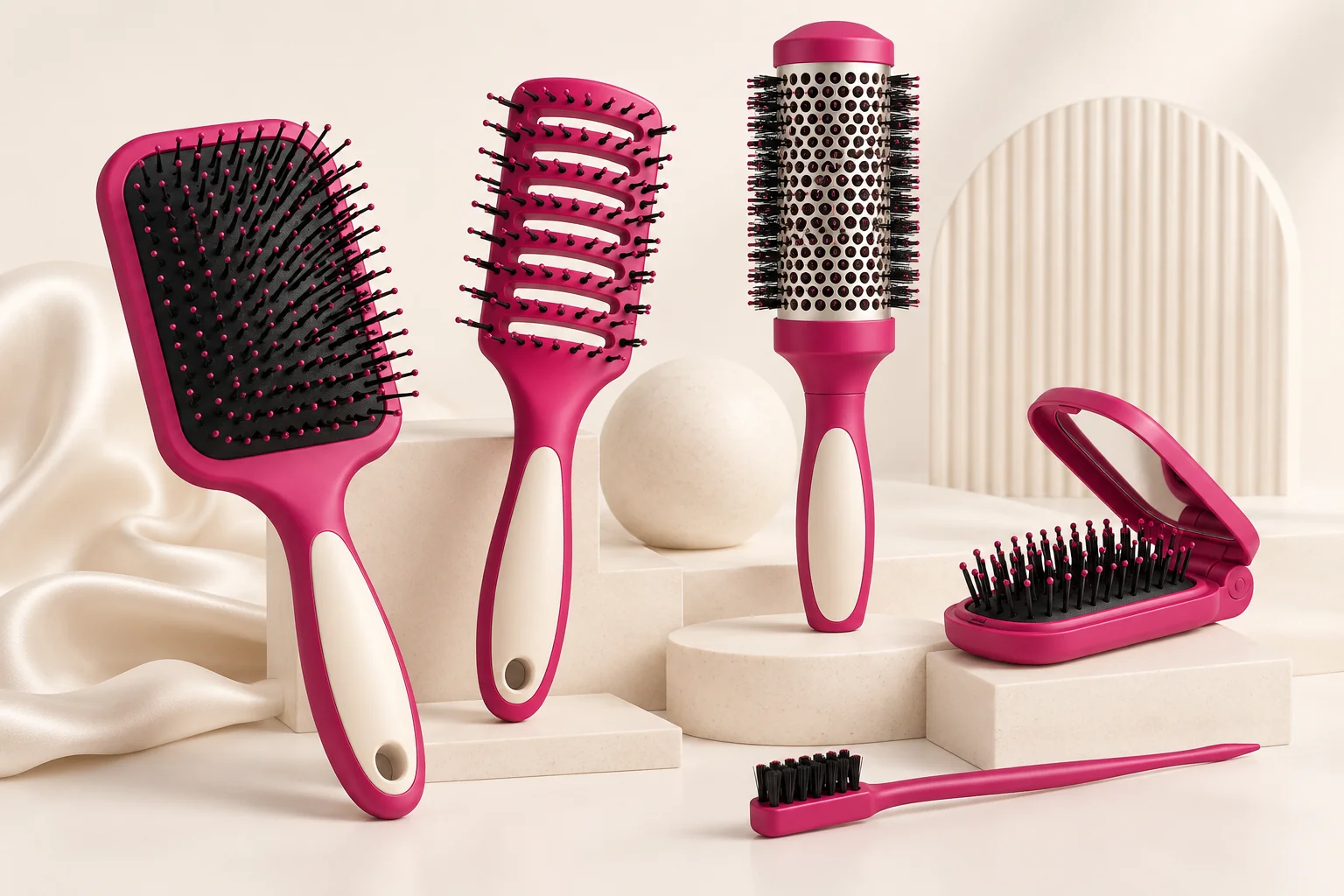
A hair brush launch needs more than a production date. Brand teams must coordinate product decisions, sample reviews, packaging, inspection and delivery. A useful development timeline shows who approves each stage and what evidence is needed before the next commitment.
There is no single reliable lead time for every project. An existing brush with your logo and a new custom design have different dependencies. Ask for a project-specific schedule that separates development, manufacturing and transport, and records the assumptions behind each estimate.
1. Define the product brief
Start with the intended user, hair type, styling task and sales channel. A salon brush, a retail detangler and a travel brush may need different priorities. Include target dimensions, handle material, bristle or pin requirements, cushion construction, colors, finish, logo placement and packaging. Identify which features are essential and which can change after sampling.
For a replacement supplier, provide an approved reference sample and measurable acceptance criteria. Describe the performance you need without assuming that an existing design can be copied or that you own another company's tooling.
2. Choose the development route
- Existing tooling: confirm which changes are possible without modifying the mold, and which colors, finishes and packaging are available for the proposed quantity.
- Modified construction: list each changed component and check whether it needs new tooling, new materials or additional evaluation.
- New custom design: agree on design files, prototype scope, tooling responsibilities and approval gates before committing to production tooling.
Ask the supplier to explain the route in its quotation. A lower unit price alone does not show the cost or timing of development.
3. Review prototypes for a defined purpose
A prototype can help your team assess proportions, grip and appearance. Ask what it is made from and which features it represents. A shape model should not be treated as evidence of the final bristle feel, material durability or production finish.
Record feedback in one controlled document with dimensions, annotated photographs and a revision number. Consolidate comments from purchasing, product development and marketing before sending them back. Multiple conflicting approval messages can create avoidable revisions.
4. Agree tooling and sample approvals
If new tooling is required, ask for the tooling scope, ownership arrangements, maintenance responsibilities and expected trial stages in writing. Confirm what happens if a trial reveals a design or manufacturing issue, including how changes are quoted and approved.
Before authorizing a production run, request a confirmation sample representing the agreed materials, construction, branding and packaging. Identify any differences from the planned production version. Keep a dated approval record and a retained reference sample; an informal photo approval may not capture feel or function.
5. Put quality checks into the schedule
Agree which dimensions, appearance details and functional characteristics will be checked, by whom, and against which criteria. If your product carries a performance or material claim, decide what evidence is required before approving that claim for packaging.
Include time to review inspection results and resolve nonconforming goods. Do not build a launch plan that assumes every first sample and every inspection will pass without changes. For a supplier review, use our manufacturer vetting checklist.
6. Separate goods-ready and delivered dates
Ask the supplier and logistics provider to distinguish production completion, inspection release, shipment departure and arrival at your receiving location. Packaging approvals, freight arrangements and receiving requirements should have owners just as product approvals do.
Work backward from the date your warehouse needs saleable inventory. Include contingency agreed with the people responsible for each stage. A factory's goods-ready estimate is not a guaranteed delivery date.
A launch planning checklist
- Approved brief and version-controlled specifications.
- Development route and tooling scope confirmed.
- Prototype limitations and review responsibilities recorded.
- Confirmation sample and packaging approval completed.
- Quality criteria, inspection timing and corrective-action process agreed.
- Manufacturing, transport and warehouse milestones shown separately.
- Named owner and decision deadline for every approval.
Start with a clear brief
JSIU Beauty develops and manufactures hair brushes and beauty brushes. To discuss a new product or an alternative supply source, send your project brief with reference images, intended market, proposed quantity and target delivery window. Request a scope and schedule for your specific project before making a launch commitment.
